Showing posts with label wood shop. Show all posts

Tuesday, December 11, 2018

Claude Monet-Impressionist painting

Claude Monet-Impressionist painting Claude Monet Biography DescriptionOscar-Claude Monet was a French painter, a founder of French  and the most consistent and prolific practitioner of the movement's philosophy of expressing one's perceptions before nature, especially as applied to plein air landscape painting. Wikipedia Born: November 14, 1840, Rue Laffitte, Paris, France Died: December 5, 1926, Giverny, France Known for: Painter Movement: Impressionism Spouse: Alice Hoschedé (m. 1892–1911), Camille Doncieux (m. 1870–1879) Education: Académie Suisse (1859–1860), École Nationale supérieure des Beaux-Arts Website Stores http://art-and-craft-hobbies.com/ http://art-and-craft-hobbies.com/shop/ group Art Studio of Lewis Baber , Post and Sell your ART. https://www.etsy.com/shop/Magikaljourneys?ref=seller-platform-mcnavArt Two Old Guys Folk Art Share this:http://Gallery-Wall-Art.com 

Sunday, December 9, 2018

Craft a Garden Scrapbook

How to Craft a Garden Scrapbook Garden scrapbooks can present a natural feeling when the audience is reading your storybook. Flowers are one of the popular natural-based elements that many people cherish. You can store flowers in a scrapbook to craft a garden style creation. To start you will need a dried flower. Compress the flower placing it into your scrapbook pocket, such as the memorabilia. Next, glue, tape, etc, the flower so that it is sticking on the page securely. You may have seen flowers preserved in bibles. The process in scrapbooks is similar, only you want to stick the flowers so that it does not fall out. How to craft flowers for scrap booking: You can use corsages, bouquets, or the colored part of the flower to craft your garden scrapbook. The compressed and dried flowers should be in a straight line, added to your scrapbook page, and smoothly seated near your photographs. Your dry flowers and compressed flowers should be laminated. Use Xyron, or any acid-free product to laminate your flowers. During the fall is the best time to pluck materials to make up a garden scrapbook. As you make up your garden scrapbook consider title page, captions, journal, lettering, photos, plant species, headings and more. If you are adding fall leaves to your scrapbook, you may want to visit a copy shop. You will need to place the leaves in a sealed container when transferring the leaves. The leaves with depreciate over time if you fail to follow instructions. You can add the leaves at your title page to start your garden scrapbook. If you are making up a scrapbook to present your garden, snap a few pictures and make up a blueprint. The blueprint should include each detail of your garden. Following, you can add a journal to let your friends and family know how you invented your garden. When to take photos: Spring, summer, winter, and fall is the best time to take photos of your garden. Each season provides you a variety of colors, shades, texture, blooms, etc. Once you snap the shots add them to your garden scrapbook. If you want to get created you can cut, paste, and add extras to your scrapbook, i.e. cut magazine clips based on your garden theme and add them to your scrapbook. Also, you can add tips beside your pictures to help your family and friend learn. During the seasons, you want to document your gardens activities as well as your own to create a genealogy, and history of your scrapbook. Record detail specifics to help your audience learn from your efforts. During the summer record, the blooms so that when winter comes you can look back on your success. When the blooms start to grow, you may want to snap photos so that you can add to your scrapbook. Try crafting your scrapbook in a chronological order so that your book tells the story you want to portray to the audience.  Some people add special rocks to their scrapbook. If you decide to add, rocks try to find the small, flat rocks. The thicker, bulk rocks will only interrupt your scrapbook. Flowers are beautiful inside scrapbooks. The flowers that set off garden scrapbooks include roses of all colors, daffodils, tulips, crocuses, and so on. Still, if you add flowers to your scrapbook you want to use petals that harmonize with your theme. For instance, if you are crafting a summer page, then use colorful flower copies. If you are crafting a fall theme, then use the flowers that flow in harmony with your theme. Website Stores http://art-and-craft-hobbies.com/ http://art-and-craft-hobbies.com/shop/ group Art Studio of Lewis Baber , Post and Sell your ART. https://www.etsy.com/shop/Magikaljourneys?ref=seller-platform-mcnavArt Two Old Guys Folk Art   Share this: http://Gallery-Wall-Art.com      

How to Craft Chimes

[caption id="attachment_176" align="alignnone" width="613"]decoration design hanging love Photo by Manesh Xavier on Pexels.com[/caption] How to Craft Chimes Did you know that you could take old reddish-brown clay made of unglazed ceramics to make chimes? (Terra Cotta Pots) The pots will make up a nice batch of chimes. To get started you will need up to ten ceramic pots. The diameter should be around 1 ¼ inch and up to 1 ¾ inches. You will need wood, 4 inches time’s six plates and varnish finish. You will need up to ten 5/8 inch grommet screws. Add up to ten rounds of beads made of wood and around 3/8 inches of spool, i.e. up to 30 pounds of anglers’ line. You will need wire up to 20 yardsticks, i.e. spools and a 7/8 inch grommet screw. How to make chimes: Now you are ready to make your chimes. On the wooden plates, add a coat of varnish, allow drying, and continuing a few times adding the varnish as needed. Use your grommet 5/8 screw, and screw it in by hand, screwing it into the plate. If you add, additional screws keep them an inch apart. Cut your line measuring lengthwise. Next, at each end feed the line through, and into the grommet screw. Work the line through until you reach the lower region of the vessel. Once you finish the step, run another line measuring lengthwise through your beads of wood, and fasten so that it forms a dual bond. You can use adhesives to fasten the area if you feel the need to do so. Take the other vessels you have available to create your chimes, threading them and regulate the measurement lengthwise as needed. You can now add the grommet 7/8 screws to hang your chimes. Fasten the screws at the middle of your crown plate. Use the wire outlined in this article to hang your chimes. You are now finished with your chimes. To complete this article I will give you a few tips on crafting snakes to place beneath the lower areas of your door so that you can keep wind out during the cold months. If you do not have a yard of fabric around your house, purchase a yard of strong textile weaves of fabric or corduroy. You will need thread that coordinates with your fabric. In addition, you will need stuffing, dry beans, and rice. Add some adhesives and felt, preferably red, white, and black. Next, gather your fabric and trim up to 10 inches wide, and around 6-inches lengthwise. Measure your door before cutting, since you will need length wider than the bottom area of your door. Use two parts of the outer regions of your fabric, gather and hand or machine sew at least 3 sides and around 3/8 inches away from the edge of your fabric. You will need to leave a short region of your fabric available. On the right side of your fabric conceal your seams and add your filling, i.e. stuffing. Turn up your edges and then stitch them and choose additives to design your snake. You can use glue, buttons, studs, etc to make your eyes if you choose to do so. As well, you can use your felt to make up the mouth, nose, and so on. Use the red felt to make the lips, tongue, etc, and the black to make up the surrounding features about the eyes, since as lids, or brows. The snakes will make up a great warming gift also. You can craft a few to give to your friends, as well as keep a few around your home to keep it warm in the winter months. [caption id="attachment_181" align="alignnone" width="647"]photo of hats hanging on tree Photo by Artem Bali on Pexels.com[/caption] Website Stores http://art-and-craft-hobbies.com/ http://art-and-craft-hobbies.com/shop/ group Art Studio of Lewis Baber , Post and Sell your ART. https://www.etsy.com/shop/Magikaljourneys?ref=seller-platform-mcnavArt Two Old Guys Folk Art   Share this: http://Gallery-Wall-Art.com

Saturday, December 8, 2018

Home Art

 Summary: It is definitely a proud moment whenever we create our own art works to decorate our house like paintings, knitting work, wooden art etc. Art at home To initiate the process of creating art at home, you will be able to find various types of projects through different art & crafts books and magazines. Home artwork There you can get ideas about simple home art as well creative home project ideas that you can try yourself. Keywords: onKeyDown=textCounter(this.form.f_artkey,this.form.avachars_key,200); Article Body:
For many of us life is a journey filled with nature’s lovely artistic creations. Many of us love to visit exotic regions in order to collect ethnic artworks or antiques to add to our home’s décor. Love and passion for art is what drives some people to go to extreme limits to obtain their valued prize. Most of us love to have exotic as well as elegant decorative items placed all around the house. Various types of such decorative items are now available in many gift as well as antique shops. It is totally up to you to decide how you want to use a certain piece of home art to add aesthetic values to your cozy dwellings.
To beautify your plain walls, you can make use of beautiful wall clocks or exquisite wall hangings of any shapes and sizes. You can also have wall scones and other light fixtures to get a plethora of light effects. However, you can even make your own home art to place them inside your house. It is definitely a proud moment whenever we create our own art works to decorate our house like paintings, knitting work, wooden art etc.
Art at home
To initiate the process of creating art at home, you will be able to find various types of projects through different art & crafts books and magazines. You can also find lot of other artist’s work to decorate your house. Instead of buying their work, it is always a good idea to use our creativity. Whenever, we are about to buy something new for our home, we must consider certain things. Sometimes we might end up adding something odd to our house. It doesn’t matter how expensive your art work is, if it doesn’t suit your décor then its definitely out the window. That is why, if we start creating our own artworks, we can completely satisfy all over artistic whimsies. Ultimately, what important is the feeling of satisfaction that you get when you create something beautiful with your own hands.
Home artwork
You can create various types home artwork such as paintings, wall hangings, mosaics, or even stands of different shapes. You can also participate in several at home art activities being conducted in nearby areas. There you can get ideas about simple home art as well creative home project ideas that you can try yourself. You will also find many different types of art-promoting organizations who can guide you and give you tips in order to create simple home artworks from scrap.
There are many books available at popular bookshops and libraries that vividly illustrate creative home projects. Just take help from these books to choose a perfect home art project for your house. If you have children then you can involve them in helping you create art at home for their playrooms and bedrooms.
Another option is to search home art galleries near in your area. In these home art galleries, you will be to make many homemade artifacts that will be perfect for your house. Sometimes you may even get inspired while looking at the items placed in such home art galleries. Somewhere in your town, you will be able locate home art studios that help nurture and develop your artistic talent.
Do not hesitate to test and try your artistic capacities. After all, it has been rightly said that there is a thriving an artist in every person.
Website Stores http://art-and-craft-hobbies.com/ http://art-and-craft-hobbies.com/shop/ group Art Studio of Lewis Baber , Post and Sell your ART. https://www.etsy.com/shop/Magikaljourneys?ref=seller-platform-mcnavArt Two Old Guys Folk Art   Share this: http://Gallery-Wall-Art.com     

Friday, December 7, 2018

Buying Paintings: Gothic Art

Buying Paintings: Gothic Art  photograph of paintings

Photo by Rene Asmussen on Pexels.com[/caption] Some of the most valuable early artwork comes from a point of time before the Renaissance had begun, and going on through the early Middle Ages, referred to as the period of Gothic art. During this particular time in history, the artwork took on telling narrative stories through pictures, and much of these pieces were Christian and secular in nature. Some of the earliest examples of Gothic art are sculptures found on cathedral and abbey walls, and the first real form of Gothic artwork began as architectural works in fact, even becoming the subject matter for many stained glass windows at the time. The style of painting that further defined Gothic art wasn’t produced until nearly fifty years after Gothic architecture and sculptures, and even though the break between Romanesque artwork and the Gothic styles has remained imprecise at best, the beginnings of Gothic artwork seems to occur in various areas at different but related intervals. The artwork began in England and France around 1200, and in other areas like Germany and Italy between 1220 and 1300. The paintings stayed just as narrative as the architecture on church walls during this time, and has stayed the territory of secular storytelling for a long time afterwards. Though Gothic art in paintings has had a relatively short time as the medium of choice amongst the artists, there is evidence that the artwork falls into four particular styles of these paintings, and these were the most common forms during this time period. The fresco, the panel painting, the illuminated manuscript, and the artwork done on stained glass are all depictions of Gothic painting. Of these particular types, stained glass artwork had remained a strong reminder of those ages long past, and is still created by master artisans that learned their trade skills from these dark ages. In the case of the other three particular forms of Gothic painting, frescoes continued to be used as the pictorial narratives on church walls in southern Europe, and were a consistent incorporation of early Christian and Romanesque traditions. In Italy, during the 13th century, the panel painting began and spread throughout Europe. With this proliferation, panel paintings became even more predominant by the 15th century, and becoming even more popular than stained glass at the time. Since not all monumental works have survived, illuminated manuscripts are the most complete record of Gothic painting, and provide a comprehensive account of styles that would otherwise perished. As the state of the world began to change, so too did the interpretations of the artwork as a reflection of these changing times and attitudes, and the movement became known as International Gothic by the late 15th century. From there, it had evolved into an art form depicting not just secular stories and allegories, but also resulted in the occurrence of more illuminated manuscripts and paintings as increased trade and the rise of cities and universities grew. With this proliferation of growth, more people were literate, and lead to better records kept with this occurring. Leading up to many of the well-known medieval artists today. The International Gothic style of artwork was developed in Burgundy, Bohemia, and northern Italy in the late 13th and early 14th centuries. During this period in Gothic art, artists traveled widely around the civilized world at the time creating a common aesthetic among the aristocracy of the time, and removing the concepts of contrary artistic styles. The main influences for this period in artwork were derived from northern France, the Netherlands, and Italy. It was during this time, that aspects of rational uses of perspective and setting became a common feature, and other features included flowing lines and rich coloring. In the case of Gothic sculpture, it had evolved from the elongated forms of the Romanesque style, and became a more naturalistic expression in the early 12th and late 13th centuries. Influences from Greek and Roman statuary were incorporated into drapery, facial expressions, and poses. The sculptor Claus Sluter and the changing tastes for more naturalistic styles became a harbinger for the end of the Gothic period of art, and signaled the beginning of the evolution into Renaissance period at the end of the 15th century. [gallery ids="162,168" type="rectangular"] In a time period where upheaval was the normal occurrence of many of the people then, Gothic art fell into the broad scope of medieval artwork that included such disparate elements and styles as Viking art and Celtic art, but in varying degrees relied upon the artistic heritage of the Roman Empire and the early Christian Church. In fact, much medieval artwork has the history of these elements conjoining and converging into the remarkable artistic legacy we read about today, and have contributed over time to the outcome of many other forms of art from the Renaissance to the present day. Website Stores http://art-and-craft-hobbies.com/ http://art-and-craft-hobbies.com/shop/ group Art Studio of Lewis Baber , Post and Sell your ART. https://www.etsy.com/shop/Magikaljourneys?ref=seller-platform-mcnavArt Two Old Guys Folk Art   Share this: http://Gallery-Wall-Art.com    

Buying Paintings: Gothic Art

 photograph of paintings Photo by Rene Asmussen on Pexels.com[/caption]

 Some of the most valuable early artwork comes from a point of time before the Renaissance had begun, and going on through the early Middle Ages, referred to as the period of Gothic art. During this particular time in history, the artwork took on telling narrative stories through pictures, and much of these pieces were Christian and secular in nature. Some of the earliest examples of Gothic art are sculptures found on cathedral and abbey walls, and the first real form of Gothic artwork began as architectural works in fact, even becoming the subject matter for many stained glass windows at the time. The style of painting that further defined Gothic art wasn’t produced until nearly fifty years after Gothic architecture and sculptures, and even though the break between Romanesque artwork and the Gothic styles has remained imprecise at best, the beginnings of Gothic artwork seems to occur in various areas at different but related intervals. The artwork began in England and France around 1200, and in other areas like Germany and Italy between 1220 and 1300. The paintings stayed just as narrative as the architecture on church walls during this time, and has stayed the territory of secular storytelling for a long time afterwards. Though Gothic art in paintings has had a relatively short time as the medium of choice amongst the artists, there is evidence that the artwork falls into four particular styles of these paintings, and these were the most common forms during this time period. The fresco, the panel painting, the illuminated manuscript, and the artwork done on stained glass are all depictions of Gothic painting. Of these particular types, stained glass artwork had remained a strong reminder of those ages long past, and is still created by master artisans that learned their trade skills from these dark ages. In the case of the other three particular forms of Gothic painting, frescoes continued to be used as the pictorial narratives on church walls in southern Europe, and were a consistent incorporation of early Christian and Romanesque traditions. In Italy, during the 13th century, the panel painting began and spread throughout Europe. With this proliferation, panel paintings became even more predominant by the 15th century, and becoming even more popular than stained glass at the time. Since not all monumental works have survived, illuminated manuscripts are the most complete record of Gothic painting, and provide a comprehensive account of styles that would otherwise perished. As the state of the world began to change, so too did the interpretations of the artwork as a reflection of these changing times and attitudes, and the movement became known as International Gothic by the late 15th century. From there, it had evolved into an art form depicting not just secular stories and allegories, but also resulted in the occurrence of more illuminated manuscripts and paintings as increased trade and the rise of cities and universities grew. With this proliferation of growth, more people were literate, and lead to better records kept with this occurring. Leading up to many of the well-known medieval artists today. The International Gothic style of artwork was developed in Burgundy, Bohemia, and northern Italy in the late 13th and early 14th centuries. During this period in Gothic art, artists traveled widely around the civilized world at the time creating a common aesthetic among the aristocracy of the time, and removing the concepts of contrary artistic styles. The main influences for this period in artwork were derived from northern France, the Netherlands, and Italy. It was during this time, that aspects of rational uses of perspective and setting became a common feature, and other features included flowing lines and rich coloring. In the case of Gothic sculpture, it had evolved from the elongated forms of the Romanesque style, and became a more naturalistic expression in the early 12th and late 13th centuries. Influences from Greek and Roman statuary were incorporated into drapery, facial expressions, and poses. The sculptor Claus Sluter and the changing tastes for more naturalistic styles became a harbinger for the end of the Gothic period of art, and signaled the beginning of the evolution into Renaissance period at the end of the 15th century. [gallery ids="162,168" type="rectangular"] In a time period where upheaval was the normal occurrence of many of the people then, Gothic art fell into the broad scope of medieval artwork that included such disparate elements and styles as Viking art and Celtic art, but in varying degrees relied upon the artistic heritage of the Roman Empire and the early Christian Church. In fact, much medieval artwork has the history of these elements conjoining and converging into the remarkable artistic legacy we read about today, and have contributed over time to the outcome of many other forms of art from the Renaissance to the present day.

 Website Stores http://art-and-craft-hobbies.com/ http://art-and-craft-hobbies.com/shop/ group Art Studio of Lewis Baber , Post and Sell your ART. https://www.etsy.com/shop/Magikaljourneys?ref=seller-platform-mcnavArt Two Old Guys Folk Art   Share this: http://Gallery-Wall-Art.com    

How to Craft Basket Flowers

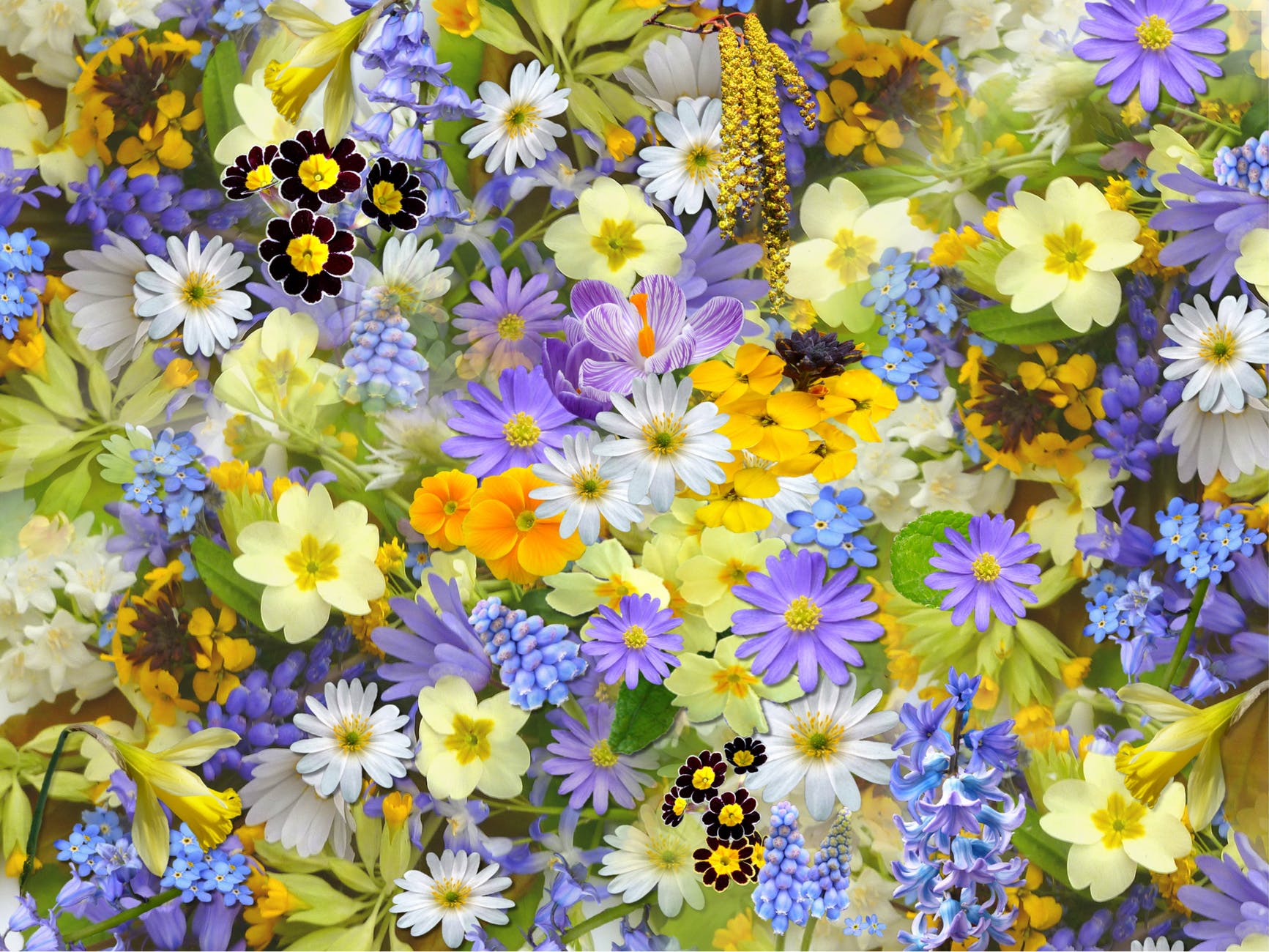
 flowers colorful plants bloom Photo by Pixabay on Pexels.com[/caption]

How to Craft Basket Flowers

 We have walked through the steps of creating the May basket, now it is time to craft your flowers. We have added handles, basket, etc, to your quilt, which at this time you should have created six blocks to make your basket. How to create flowers: We are quilting flowers. On the left side of your fabric, you will have invented pink squares. You can trace your pattern to start your project. Trace at least one flower (Choice), use your outside solid lines, and repeat your steps to create the foliage, or leaves. Use the variety of green patterns and use the yellow narrow pieces to create the center of your flower. You can design roses if you like. Use a variety of greens, red, pink, white, etc, if you intend to create roses and petals. Along the lines, you have marked, cut the fabric strips sewn onto your fabric, the shaped patterns that form your design, cutting only near the lines. Use freezer paper and turn it over so that you reveal the side that does not have a shine. You want to create a starting line for the six centers of your flowers, and the flowers also. Once you mark the 12 parts, mark the leaves (12), marking them inside the dash lines. Now you are ready to cut your shapes. You will need an iron and board. Use your hot press, or iron to press the flowers on your paper, pressing in the middle of your flowers on the left side and in the middle. You want the glossy paper turned in the direction of your fabric flower at this point. Do the same with the center of the flowers and foliage. Next, collect your yellow filament/thread and tone it with the center of your flower. If the colors do not match, try another shade of yellow. Run lines of stitches into your cloth, which encloses the ring of the freezer paper. You want to congregate your material around this ring, so pull your filament up at the end. Now, tie your thread, press the ring, and use your starch bottle, spraying the region. Do the same for the center of your flowers. Next, use your variety of green filaments that match your leaves and collect the allowances at the seam. (1/4 inch) Collect around the foliage and streamlines of stitches along your fabric, about the enclosed region of your ring that is designed on the freezer paper. You want to collect your textile about the ring. Pull your filament/thread up at the finish and tie it, pressing the ring. Again, spray with starch. When you congregate your allowances at the flower seams, snip the inner points of the flower corolla/petals where the flower collectively forms a ring. You will need to collect your thread that matches the color of your petals, such as pink. Just as you collected the edges of your leaves, do the same for your corollas. Once you finish running stitch lines in your fabric, which you have enclosed freezer paper about the ring, you will need to gather your material about the ring. Next, pull your strands of thread up at the finish. Next, bind your filament and then press the ring. Press, and spray the region with fabric starch. Now seam your allowances, i.e. snip the central points of the leaves, flower center, etc where the flower collectively forms a ring. Press and starch to complete your crafting task:   Now you are ready to assemble the top of your quilt. After you assemble, you can move to finish your


craft. Website Stores http://art-and-craft-hobbies.com/ http://art-and-craft-hobbies.com/shop/ group Art Studio of Lewis Baber , Post and Sell your ART. https://www.etsy.com/shop/Magikaljourneys?ref=seller-platform-mcnavArt Two Old Guys Folk Art   Share this: http://Gallery-Wall-Art.com  

Wednesday, December 5, 2018

Buying Paintings: Futurism

  Buying Paintings: Futurism A 20th century art movement with its’ roots in Italian and Russian beginnings, Futurism is said to have largely began with the writing of a 1907 essay on music by the Italian composer Ferruccio Busoni, and explored every medium of art to convey its’ meanings. The Italian poet Filippo Tommaso Marinetti was the first to produce an article in which was summed up the major principles that became the Manifesto of Futurism in 1909. It included the passionate loathing of ideas from the past, and with that enmity of political and artistic traditions, espoused a love for speed and technology. The philosophy of Futurism regarded the car, the plane, and the industrial town as legendary of the technological triumph of mankind over nature. With Marinetti at the helm, a few artists of the time introduced the tenets of the philosophy to the visual arts, and represented the movement in its’ first phase in 1910. The Russian Futurists were fascinated with dynamism and the restlessness of modern urban life, purposefully seeking to provoke controversy and attract attention to their works through insulting reviews of the static art of the past, and the circle of Russian Futurists were predominantly literary as opposed to being overtly artistic. Cubo-Futurism was a school of Russian Futurism formulated in 1913, and many of the works incorporated Cubism’s usage of angular forms combined with the Futurist predisposition for dynamism. The Futurist painter Kazimir Malevich was the artist to develop the style, but dismissed it for the inception of the artistic style known as Suprematism, that focused upon the fundamental geometric shapes as a form of non-objective art. Suprematism grew around Malevich, with most prominent works being produced between 1915 and 1918, but the movement had halted for the most part by 1934 in Stalinist Russia. Though at one point, those Russian poets and artists that considered themselves Futurists had collaborated on works such a Futurist opera, but the Russian movement broke down from persecution for their belief in free thought with the start of the Stalinist age. Italian Futurists were strongly linked with the early fascists in the hope for modernizing the society and economy in the 1920s through to the 1930s, and Marinetti founded the Futurist Political Party in early 1918, which was later absorbed into Benito Mussolini’s National Fascist Party. As tensions grew within the various artistic faces that considered themselves Futurists, many Futurists became associated with fascism which later translated into Futurist architecture being born, and interesting examples of this style can be found today even though many Futurist architects were at odds in the fascist taste for Roman imperial patterns. Futurism has even influenced many other 20th century art movements such as Dadaism, Surrealism, and Art Deco styles. Futurism as a movement is considered extinct for the most part with the death of Marinetti in 1944. As Futurism gave way to the actual future of things, the ideals of the artistic movement have remained significant in Western culture through the expressions of the commercial cinema and culture, and can even be as an influence in modern Japanese anime and cinema. The Cyberpunk genre of films and books owe much to the Futurist tenets, and the movement has even spawned Neo-Futurism, a style of theatre at utilizes on Futurism’s focuses to create a new form of theatre. Much of Futurism’s inspiration came from the previous movement of Cubism, that involved such famed artists as Pablo Picasso and Paul Cezanne, and created much of the basis for Futurism through its’ philosophy. Website Stores http://art-and-craft-hobbies.com/ http://art-and-craft-hobbies.com/shop/ group Art Studio of Lewis Baber , Post and Sell your ART. https://www.etsy.com/shop/Magikaljourneys?ref=seller-platform-mcnavArt Two Old Guys Folk Art   Share this: http://Gallery-Wall-Art.com      

Painting, decorating

Painting, and Decorating Painting, decorating and other ways to make sure your house is in a good condition to sell. House selling has become a very competitive market, and though people are desperate in some areas to buy a house, its important you take care to ensure that the you've done all you can to make your house as attractive, safe and saleable as possible. It is said that the average house buyer has no vision – which means you need to make their 'envisioning' themselves within the house as easy as possible. Dark paintwork is a definite turn off – as are stained, worn or smelly carpets – both of which need to be taken care of. On the latter, you could offer an 'allowance' or remove a fraction of the house costs for carpets – or, if you can, invest yourself and replace them, to allow a possibly higher sale price. Walls should be painted off white, or antique white – or possibly very pale and pastel shades if you're planning on redecorating – you may have no option if your walls are stained, marked or damaged. Its also a good time to ensure that everything that you've been meaning to repair is taken care of is actually done – a faulty stair tread, banister or fence in the garden may only be a minor annoyance to you, but can be a danger to anyone looking at the house. Its hard to sell your house without help, but one of the biggest tips you can take to ensure your house sells is to make sure you've removed your 'imprint'. Looking at the house impartially, remove anything that screams 'my personality' and 'my personal space'. Things like photos, pieces of unique artwork, and ornaments and more can be removed before people come to view the house. Remember – they want to buy the house, not feel how you lived there, so if you haven't finished boxing up your non essentials by the time you start showing them the house, its time to consider whether you really need the clutter still unpacked – or whether its time to put it in the bin.   Website Stores http://art-and-craft-hobbies.com/ http://art-and-craft-hobbies.com/shop/ group Art Studio of Lewis Baber , Post and Sell your ART. https://www.etsy.com/shop/Magikaljourneys?ref=seller-platform-mcnavArt Two Old Guys Folk Art   Share this: http://Gallery-Wall-Art.com     

Sunday, October 8, 2017

Wood Presents And Folk Russian Painting


Summary:
Khokhloma art painting is a bright distinctive phenomenon of Russian  decorative applied art. This traditional art wood craft first appeared in XVII century in the Nizhny Novgorod province and got its name from a big trading village Khokhloma, where these all wooden art works were originated.


Article Body:
Originally Khokhloma <b>wood tableware</b> were produced in monasteries and for the czar court only.  At that time Khokhloma tableware production was not large scale. It was because of expensive imported tin. In 1720s after the end of the North War tin flow to Russian increased. The price went down and the material came within reach of many masters. The production and the sales of brightly painted hand made <b>art works</b> expanded.

Thus in the XIX century items with khokhloma painting were famous not only in Russia but in Persia, India, Middle East, the USA and Australia as well. The export of khokhloma items grew after the worldwide exhibition in 1889 in Paris.

In 1916 Nizhegorodskoye Zemstvo established the first School for Wood-Working Arts and Crafts in Semyonov. The folk arts and folklore flourished in Volga region near Nizhny Novgorod province. No other territory in Russia could equal it in the number and originality of the folk arts and crafts that had sprang to life and were developed in the local communities. The Khokhloma <b>art painting on wooden tableware</b> is the type of Nizhny Novgorod <b>folk art craft</b> that became most popular in Russia and foreign countries.

The "grass-leaves" decorative ornaments and their peculiar color scheme suggest that the Khokhloma art is rooted in the ancient Russian decorative culture while the imitation of gilt ornaments on wood dates back to the medieval Russian handicraft skills. The painting technique has been somewhat upgraded but remains essentially the same as in the ancient time.
<b>Khokhloma russian painting</b> amazes you with its delicate grass pattern and festive coloring, which is based on combination of scarlet cinnabar and flittering gold against the black lacquer background. This is Khokhloma specific feature. Masters used tin powder and lacquer to obtain such gold color. Now they use aluminum powder.

First, the <b>art tableware</b> are shaped on a lathe from the dried lime wood, which are turned into bowls, vases, mugs, dishes and spoons.
They are dried and covered with red and brown primer, so that they start looking like earthen. The unpainted articles are now coated with drying oil. Next they are polished with powdered aluminium. They become dull shining, like silver, and go to the painting division. Painted articles are then varnished and hardened in ovens at the temperature of 120-130 degrees. The heat turns the varnish yellow, the "silver" into "gold" and mellows the vivid design with an even, golden tone.

The Khokhloma dishes, cups and wooden drink pots were used for serving food at holiday feasts. The wooden tableware using at the Moscow house of an important statesman had to look valuable; accordingly, they were modeled on the rich painted plates decorated with real golden fabricated by the jewelers for the luxurious homes of the Russian nobility. Thanks to the special varnish and high-temperature processing they are quite practical and safe in use. <b>You can drink and eat using these Khokhloma tableware</b>, because such wares not sensitive to cold and hot, salty and sour food.

Apart from Khokhloma <b>wood presents</b> of tableware most visitors to Russia will have at least one set of Matrioshka dolls in their luggage. These dolls within dolls have long been a source of fascination. The undoing of the main doll to reveal others almost ad-in-finitem has always produced wonderment and appreciation for the woodcrafts art.

Examples of beautiful <b>Khokhloma wood art presents</b>, Paleh and Mstera <b>varnished miniatures</b> you can look at <b>art store</b> online site. It is amazing that what started out as a true folk tradition over 300 years ago is still thriving and remains basically true to it's roots, albeit on a more organized scale.